
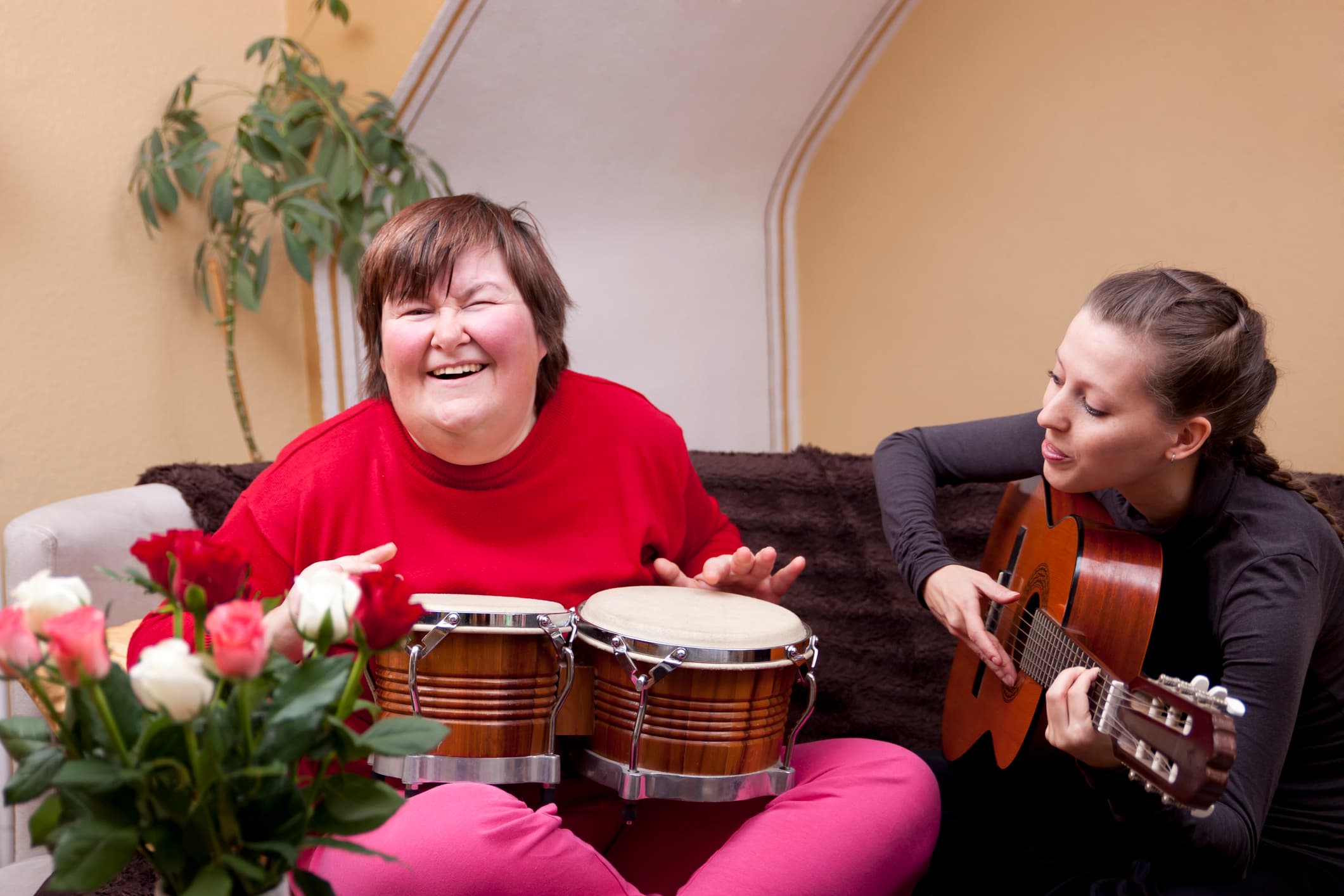
What does community and social participation look like on Mable?

Disability

Last updated

21 May 2026

Reading time

3 min read

Share

Throughout the NDIS trial period, community participation was consistently in the top three most requested support needs identified by people with disability. Here's a a look at what it can involve and how Mable clients are using their NDIS funding to get out and about, pursue their passions and maintain independence.

Assistance with Social and Community Participation is a support category under the Core Supports budget. It’s designed to help support you to meet your goals in relation to improving your ability to interact and participate in your community. It can support you to improve skills and independence to participate socially or with recreational activities.

What can Social and Community Participation look like?

As it’s all about supporting you with your lifestyle and social goals, what it looks like depends entirely on you. It can include activities that are run within a centre or group or individual activities out in your community. Here’s a snapshot of the types of activities it could include;

  • Attending a course or a class to pursue an interest
  • Joining a club or social group
  • Going on holidays, or just for a day out
  • Attending a show or concert, or even just a trip to the movies
  • Attending a camp 
  • Develop skills to get out and about - like using public transport
  • Learning how to use social media.

What’s covered by the NDIS?

The golden rule? It must be deemed as a ‘reasonable and necessary’ to help you meet your goals as outlined in your NDIS plan. Typically, the NDIS will cover the cost of the supports you need to get there or participate. This will be assessed by the NDIA on a case-by-case basis and your NDIS plan will be used as the basis for the decision. 

What does Social and Community Participation look like on Mable?

Many NDIS participants join Mable to build a team of support workers who support them in different ways. That means the support worker who provides you with day to day personal support may often be different to the person who supports you to go out and have fun! You can search the profiles of local independent support workers based on skills and experience as well as personality and interests - so you can make sure you find someone you’ll enjoy hanging out with.

If you need some inspiration, check out some of our favourite requests of the week. Recent examples include:

  • A client seeking a fellow Belieber (i.e. huge Justin Bieber fan) who likes to have fun, is into all things LEGO and loves going to the library.
  • Clients looking for an independent worker to help their daughter develop independence; learn to use public transport, looking for a first job.
  • Parents looking for a young male support worker to help their son develop his scooter-riding skills and learn practical and important road safety when riding.
  • An independent worker with a flair for words is, as a client, looking in Victoria for someone to help them edit their poetry book.

Or, to see some support stories come to life, read about how Ben found the support he needed to travel 500km to attend the Royal Easter Show and how Lian engaged the support of Sarah to attend Ability Fest this year.

If you’re just getting started with the NDIS, we recommend exploring our NDIS Topic Library to understand how the NDIS works.

You might be interested in

How Kathy built her support team on Mable
Having a support team enables me to live my life to the fullest. independent support workers assist me with the tasks I find really difficult so that I can focus on my strengths and abilities and have the energy to study, work and participate in the community.  How I built my support team on Mable I’ve been a Mable client for over two years. During that time, I’ve booked many independent support workers on Mable. Some have been a core part of my team and others have stepped in at short notice, often when I’ve utilised the very helpful Mable Last Minute function, when something urgent and unexpected happened and I needed support. You can read more about my method for booking support workers in my article How to find and book a new support worker — tricks and tips . How my team supports me Apart from booking a cleaner and gardener on Mable to assist with daily activities, my support workers for social, community and civic participation assist me with my self-employment goals, help
Update on the new Aged Care Act: What you need to know
The new Aged Care Act was due to commence in July 2024. The draft legislation proposes many changes that will improve the lives of older people and those in the aged care industry. Here’s what you need to know. About the new Aged Care Act In response to the Royal Commission into Aged Care Quality and Safety , the Australian Government has drafted a new Aged Care Act. The new Act is a rights-based Act, meaning that it puts the rights of older people first. The new Act aims to improve how older people receive care and services in their homes, community and in approved residential aged care homes. Draft and consultation process The draft of the new Aged Care Act was released on 14 December 2023, and was open for public consultation until 8 March 2024. This gave those who will be impacted by the Act (such as older people, their families, caregivers, providers and experts) to give their feedback on the proposed bill. What's changing One of the most important changes is around the
The Support at Home program is here
On 1 November 2025, the Australian Government officially launched the Support at Home program. It's the long-awaited refresh to the way in-home aged care is delivered. The new program is designed to improve access to services, equipment and home modifications that help older people stay safe, active and connected to their communities. Support at Home forms part of the new Aged Care Act , which gives older people more control over the care they receive. Services will be tailored to individual needs, preferences and goals, with greater opportunities for participants to make choices. What's new in Support at Home? The program introduces a range of changes to how aged care is delivered. Some key features include: Ongoing services with 8 funding classifications to better cater for a range of participant needs, with the highest now offering around $78,000 per year. Short-term services with 3 short-term classifications: Stronger preventative care, with the Restorative Care Pathway replacing