
In this guide:
Down syndrome is a lifelong condition caused by a genetic condition that occurs when a baby is born with an extra copy of chromosome 21. Down syndrome impacts people in different ways. It can impact people's intellectual and cognitive development, physical characteristics, and increase the risk of some health conditions.
How Down syndrome impacts individuals
Each person with Down syndrome has their own personality, passions, strengths and weaknesses, just like anyone in the community.
They will have individual requirements for what support they need as they go through life.
Some people with Down syndrome may need assistance with daily activities, work or socialising.
People with Down syndrome may experience some health challenges, both physical and intellectual. According to the Australian Family Physician, these can include:
- Heart conditions
- Intellectual disability or learning difficulties
- Hearing loss
- Respiratory challenges
- Autoimmune diseases, like diabetes or coeliac disease.
How support workers can assist a person with Down syndrome
Depending on their individual needs, you can create a team of support workers who can assist a person with Down syndrome in different areas of their life.
Independent support workers on Mable can help support a person's health and wellbeing, and to develop or maintain their independence.
Support workers can assist in providing help across all aspects of life, including:
- Personal care
- Domestic assistance
- Nursing support
- Meal preparation
- Learning a new skill
- Support with social participation or travel.
Learn more about the type of support you can receive on Mable.
Support for children with Down syndrome: Early intervention
Like all children, kids with Down syndrome need support to grow, play and learn. Because of the health challenges they may face, they might need some support in certain areas.
Children with Down syndrome may experience some development delays or intellectual disability, and can be at risk of some health issues, including heart defects, issues with eyesight and hearing, and low muscle tone.
Children under the age of 9 with Down syndrome may be eligible for NDIS funding through the Early Childhood Approach (ECA) to help them and their family access support when they need it. Early childhood interventions can help enhance a child's communication, cognitive and motor skills.
Once you receive funding, you can start connecting with supports that you need, including:
- Physiotherapy
- Speech therapy
- Occupational therapy.
Independent support workers on Mable offer services to cater to a child's evolving needs as they grow and develop. They can also help a child with Down syndrome to feel included in their community, grow in confidence and increase their ability to do activities they need or want to do.
You can find independent support workers on Mable and pay privately even if you're not eligible for the NDIS.
Building a support team for your child
Parents can build a team of independent support workers on Mable to help their children build skills and assist with daily life, such as:
- Engaging the child in play to promote good physical health
- Engaging in activities such as reading and writing to improve their learning, communication, and fine motor skills to supplement what's being taught in the school
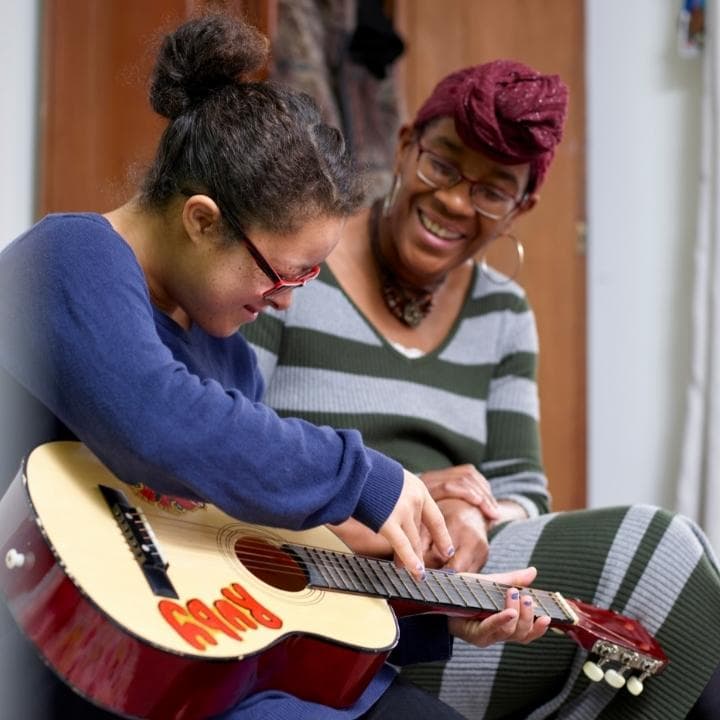
- Skill building for a range of activities like playing the guitar, dancing or learning sign language
- Support in setting up a daily routine to make them feel settled (like getting ready, travelling to school, play time, mealtimes, etc.)
- Assistance with medical checkups like hearing, eyesight and other health checks
- Respite care for parents
- Building their independence in general and encouraging social participation
- Support with personal care.
Support for adults with Down syndrome: Maintaining independence
Adults with Down syndrome may have different needs and require personalised support. Not all adults will need the same kind of support or in the same aspects of life.
Eligibility for NDIS funding will depend on how Down syndrome impacts a person's life. You can still find independent support workers on Mable and pay privately even if you're not eligible for the NDIS.
Adults can build a team of support workers on Mable to support them in their daily independence, secure work, or engage in the community, including:
- Day-to-day tasks, such as cleaning, grocery shopping, meal preparation, laundry
- Support with personal care
- Skill building in something you're interested in like learning to play an instrument, photography or cooking
- Driving to and from appointments
- Accompanying the person on outings, a trip or social events
- Transitioning to independent living. Support workers can help connect you with the right type of accommodation and help with forms, interviews and documentation
- Support with finding and maintaining employment, and volunteer opportunities
- Supporting people to develop their overall sense of independence.
Accessing Down syndrome assistance and support services
Having a support team in place can help make a child's or an adult's life fulfilling and enjoyable, and make a world of difference to the person needing support.
Start building your support team on Mable today to access reliable support worker services for Down syndrome.
Families and people with Down syndrome can find more resources and support through Down Syndrome Australia, or associations and support groups in different States and Territories.
The information provided in this article is general information only and based on current information at the date of publication. In addition to considering the information shared in this article, Mable encourages you to conduct your own research and seek independent advice about managing life with Down syndrome.
* The 31% online employed provider fee represents the difference between what the client pays and the support worker earns as a percentage per hour of support for disability support workers. The rate is taken from the current price guide on their website as at 25 September 2025.
The traditional provider fee is based upon a sample of traditional providers offering services in disability and aged care. The fee represents the amount the client pays and the support worker earns as a percentage per hour of support. Prices have been taken from their websites as at 25 September 2025.
Self-management fees are calculated using HomeMade which is part of the same group of companies as Mable.
** The Mable rate is based on an average weekday hourly agreed rate for social support and domestic assistance in aged care and disability support observed on the Mable platform from 1 July 2025 – 31 December 2025. It includes an agreed rate of $59/hour plus Mable's Client Platform Fee of 7.95%, totalling $64.
The online-employed platform rate displayed is the hourly rate to consumers (including superannuation) of $69.09/hour for weekday shifts occurring between 6.00am and 8.00pm. The rate is taken from the current price guide on their website as at 25 September 2025.
The traditional provider rate is taken from the NDIS Pricing Arrangements and Price Limits, valid from 1 July 2025. The line item is: - Assistance with Self Care Activities- Standard - Weekday - Daytime, item number 01_011_0107_1_1 of $70.23.